The Failure of the Modern Project: Part 2 of 4
“The modern world is not the triumph of reason, but the revenge of Prometheus.”

In The Kingdom of Man, Rémi Brague presents a formidable critique of modernity not as the triumph of human reason but as the culmination of a metaphysical rebellion—one that sought to replace divine order with human sovereignty. Having already examined the medieval roots of this shift in earlier chapters, Brague turns in Chapter 7 to the decisive moment when the modern project crystallized: the intellectual and technological ferment of the late Middle Ages and early modernity, culminating in the visions of Francis Bacon and René Descartes. This chapter is not merely an exercise in historical retrieval but a profound meditation on how Western thought abandoned the idea of nature as a given reality to be understood and instead embraced it as raw material to be mastered.
Formation
Brague begins by dismantling the myth that modernity emerged ex nihilo, a clean rupture from a stagnant medieval past. On the contrary, the Middle Ages were a period of remarkable innovation—agricultural advancements, mechanical inventions, and architectural breakthroughs—yet these developments were not yet framed within an ideology of progress or domination. Medieval thinkers like Roger Bacon and Frederick II of Hohenstaufen marveled at technology, but they did so without the modern conviction that nature itself must be remade. The key difference, Brague argues, was the absence of a project—a systematic, willed effort to subordinate the natural world to human ends. This changed in the Renaissance, when the rediscovery of Hermetic, Gnostic, and Epicurean texts fostered a new pessimism about nature’s adequacy. The world was no longer seen as a harmonious creation but as flawed, even botched, requiring human intervention to correct its defects.
Central to this shift was Francis Bacon, who recast knowledge not as contemplation but as power. Brague meticulously dissects Bacon’s vision of a “Kingdom of Man,” where science and technology would restore humanity’s lost dominion over creation. What makes Bacon’s project distinctively modern is its eschatological fervor—the belief that through empirical mastery, man could undo the effects of the Fall. Yet, as Brague notes, this was a secularized eschatology, one that retained the structure of redemption but emptied it of grace. Bacon’s New Atlantis was not a city ordered to the divine but a technocratic utopia where knowledge served only to expand human empire. The implications were profound: if nature was no longer a reflection of divine wisdom but mere material to be manipulated, then man’s relationship to it was no longer one of stewardship but of conquest.
Descartes, though less overtly millenarian than Bacon, deepened this logic by internalizing it. His famous declaration that man must become “master and possessor of nature” was not merely a call for technological advancement but a metaphysical revolution. For Descartes, certainty began with the thinking self—the cogito—and from this foundation, the entire external world could be subjected to methodical control. Brague astutely observes that Descartes’ project was not just about dominating nature but about mastering the self first. The Cartesian man was a sovereign ego, emancipated from tradition, authority, and even the constraints of his own passions. Yet this sovereignty came at a cost: the expulsion of angels, celestial hierarchies, and any mediating order between man and the brute cosmos. The result was a world stripped of intrinsic meaning, where nature was reduced to res extensa—mere extension, waiting to be shaped by human will.
What makes Brague’s analysis so compelling is his ability to trace the theological undercurrents of this transformation. The modern project, he suggests, is not merely a rejection of medieval thought but a heretical parody of it. Where Aquinas saw grace perfecting nature, Bacon and Descartes sought to replace nature with artifice. Where the medievals understood technology as a remedy for human weakness, the moderns envisioned it as a tool of unbridled mastery. And where premodern thought situated man within a cosmos teeming with meaning—between angels and animals, heaven and earth—modernity left him alone in a silent universe, burdened with a sovereignty he could neither justify nor sustain.
More than an intellectual history, Brague offers a diagnosis of modernity’s deepest pathology. He does not write as a nostalgic reactionary but as a clear-eyed critic who recognizes that the “Kingdom of Man” was always doomed to fail because it mistook dominion for freedom, power for wisdom, and control for redemption. The modern project did not liberate man; it exiled him from a world that once made sense.
From Baconian Vision to Scientific Practice
In Chapter 8, Brague examines how this project began to materialize in the 17th and 18th centuries, not as a triumphant march of progress, but as a paradoxical and often hubristic endeavor. The dream of dominion, once confined to philosophical treatises, became a concrete program, fueled by experimental science, technological ambition, and an unshakable faith in human perfectibility. Yet, as Brague reveals, this “realization” was fraught with contradictions, unrealized fantasies, and a growing disconnect between power and wisdom.
Giovanni Maria Lancisi, the papal physician, exemplifies this shift, advocating for science’s application to medicine while cloaking his innovations in classical references (“nature speaks in the language of mathematics”). Yet, as Brague notes, the true technological revolution lagged behind the rhetoric:
“What was only a dream with the great innovators at the beginning of the seventeenth century became a concrete program… yet for the technological bases, it was necessary to await the nineteenth century.”
Bacon’s legacy was embraced with near-religious fervor. Thomas Hobbes declared “knowledge is for the sake of power”; Robert Boyle praised Bacon as a pioneer of experimental philosophy, though Brague dryly observes that Boyle, unlike Bacon, “was a true scientist.” The Baconian ideal—knowledge as utility—permeated the Royal Society and Enlightenment thought. Locke’s diary captures the spirit:
“Behold a vast field of knowledge suitable to the use and advantage of men in this life: to invent new machines… to increase the sum of our wealth, i.e., things useful to the commodiousness of our existence.”
Yet this utilitarian turn was not without dissent. Cuvier and Jacobi upheld the ideal of disinterested knowledge (“the sole goal of science is the honor of the human spirit”), while critics like Joseph de Maistre and Justus von Liebig dismantled Bacon’s reputation, exposing his plagiarism and methodological naivety.
Technological Dreams and Utopian Delusions
The heart of the chapter explores the gap between Baconian promises and reality. The 18th century’s “spectacular” advances—electricity, hot-air balloons, Lavoisier’s chemistry—were symbolic victories, yet they fed into a mythology of limitless progress. The lightning rod, once the prerogative of Zeus, became a testament to human dominion. Balloons, Proust wrote, turned aviators into “modern demigods.” But Brague underscores the irony:
“The airplane represented a gain in speed, but it did not bring a change of perspective.”
More striking were the era’s technological utopias. Where Thomas More’s Utopia sought harmony with nature, Bacon’s New Atlantis envisioned a technocratic paradise. The Rosicrucian manifestos and Andreae’s Christianopolis flirted with scientific idealism, but Bacon’s successors—like the French revolutionary William Godwin—took the logic to its extremes:
“Mind one day will become all-powerful over matter… [Men] will no longer need justice, or government… [and] a perfect control over our own body can one day make us immortal.“
This fevered optimism birthed transhumanist fantasies centuries ahead of their time. Russian thinker Nikolai Fedorov dreamed of “resurrecting ancestors by technological means”; Soviet architects planned to reanimate Lenin’s corpse. Brague’s verdict is laconic:
“The necessary consequence of immortality will be the abandonment of sexual reproduction… Once they are immortal, human beings, no longer having any need to reproduce, will all be adults, and childless.“
The Religion of Progress
The chapter culminates in a dissection of the idea of progress—a secularized millenarianism that replaced divine providence with faith in human ingenuity. Turgot, Condorcet, and Comte enshrined progress as “the truly fundamental dogma of human wisdom,” while Darwinism lent it a pseudo-scientific veneer. Brague’s critique is incisive:
“It is difficult to affirm that the human race has progressed in civilization… Progress therefore becomes the object of a belief.”
The more power we amass, the more elusive true mastery becomes. The Baconian project, once a bold vision, degenerated into a cargo cult of utility, where technological feats substitute for moral or metaphysical grounding. A devastatingly lucid account of modernity’s founding illusions.
The Birth of Anthropology
In the preceding chapters, Brague meticulously traced the intellectual and technological foundations of the modern project—the Baconian dream of human dominion over nature, the Cartesian reconfiguration of the self as sovereign, and the Enlightenment’s faith in progress. Now, in Chapter 9, he turns to the anthropological revolution that made this project possible: the redefinition of man himself. The title, “The Master Is There,” is ironic, for the chapter reveals how modernity’s “mastery” was predicated on a radical reinvention of human nature—one that discarded the paradoxes of classical and Christian anthropology in favor of a flattering but ultimately hollow self-image.
Brague opens with a striking observation: premodern thought never needed a “science of man” because humanity’s place in the cosmos was self-evident. Ancient and medieval thinkers grappled with the condition of man—his nobility and his frailty, his place between angels and beasts—but not his essence. As Brague notes:
“The superiority of man vis-à-vis the other beings was perceived with such calm evidentness that it did not invite one to ask, what exactly is man?“
This changed with modernity. Montaigne and Bacon pioneered the study of man as a distinct object of knowledge, but it was the Enlightenment that enshrined anthropology as the “only solid foundation for the other sciences” (Hume). The nineteenth-century philosopher Auguste Comte took this further, collapsing all knowledge into a single “science of humanity,” where man became both subject and sovereign of his own inquiry. The consequences were profound: dignity was no longer a given but a claim, no longer rooted in transcendence but in human self-affirmation.
Central to this shift, according to Brague, was the rejection of original sin—the “scandal” of Christian anthropology that had long framed human dignity as a lost and restored inheritance. The Enlightenment, Brague argues, replaced this narrative with a myth of innate goodness:
“The first movements of nature are always right; there is no original perversity in the human heart.” —Rousseau
Voltaire dismissed Pascal’s “misery of man” as obscurantism; Kant reframed the Fall as a step toward rational maturity. Yet this optimism came at a cost. Without the doctrine of the Fall, evil had to be explained anew—and modernity found its scapegoats. Brague’s analysis here is chilling:
“The search for a guilty party imposed its own exigencies… Only two social groups present these characteristics: the Jewish people and the Catholic Church.“
From Voltaire’s écrasez l’infâme to the Nazis’ racial theories, the Enlightenment’s “humanity” was often a rhetorical weapon, wielded against those deemed inhuman.
The chapter’s most provocative section traces how modernity sacralized man himself. With original sin discarded, humanity became an object of faith—Fichte declared that belief in man’s moral capacity required “nothing less than an act of faith.” This culminated in Comte’s Religion of Humanity, complete with saints (great men), calendars (purged of Christian feasts), and a positivist “hell” for retrograde figures like Napoleon.
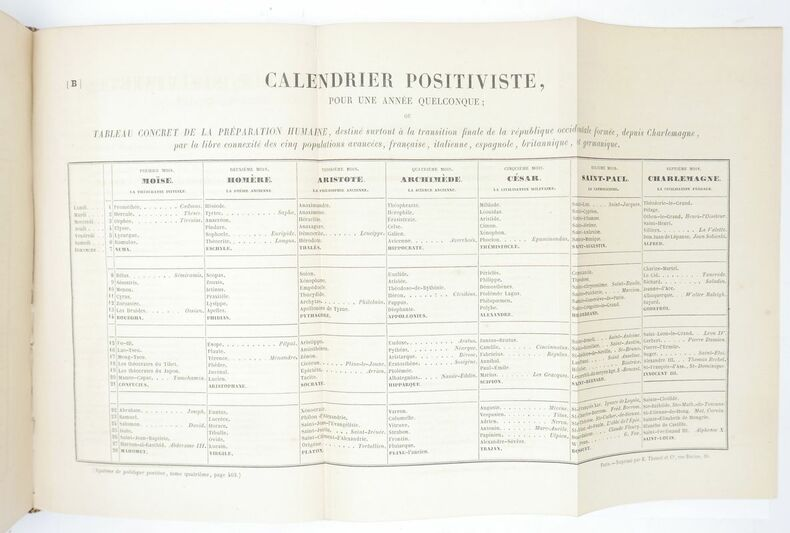
The irony is thick: the “Kingdom of Man” ended not with Nietzsche’s Übermensch but with Lenin’s mausoleum and the cult of Lei Feng. Brague’s conclusion is implicit but damning: modernity’s “mastery” rests on a delusion. By exalting man as inherently good and self-sufficient, it burdened him with a sovereignty he could neither justify nor sustain. The Enlightenment’s “humanity” was a tautology—man was worthy because he declared himself so—and its cult of progress a substitute for transcendence.
The Neutralization of Nature
In Chapter 10, Brague turns to the moral and metaphysical consequences of this project, revealing how the modern “dominion over nature” necessitated a radical redefinition of nature, work, and even value itself. The result is a profound critique of how modernity’s bid for mastery hollowed out the very foundations of moral order, replacing objective goods with subjective valuations.
Brague begins by examining how modernity reframed nature as a passive, malleable resource. No longer a cosmos imbued with intrinsic meaning or divine craftsmanship (as in the medieval view of nature as a vicar of God), nature became mere matter—raw material for human will. Descartes epitomized this shift, dismissing nature as “no goddess or imaginary power,” while Boyle systematically stripped it of any residual agency, attacking notions like horror vacui as superstitious impediments to human empire.
“The veneration wherewith men are imbued for what they call nature has been a discouraging impediment to the empire of man over the inferior creatures of God.” —Boyle
This neutralization had moral implications: nature ceased to be a guide for human action. By the 18th century, poets and philosophers depicted nature as indifferent to good and evil—a blank slate for human projects. The stage was set for Locke’s revolutionary claim: work, not nature or divine order, confers value.
Work as Self-Creation
For Locke, work was not merely economic activity but the very act by which man creates himself. Brague highlights Locke’s literal reading of Genesis: man’s dominion over the earth is realized through labor, which transforms worthless matter into property—and property, in turn, grounds political society. This idea reached its zenith in Rousseau’s paradoxical assertion that the social contract transforms man “from a stupid and limited animal into an intelligent being and a man.”
Kant formalized this logic in his pragmatic anthropology, where man is no longer defined by what nature made of him but by what he makes of himself. The implications are staggering: humanity is no longer a given but a project. As Brague notes:
“For the moderns, everything occurs as if it were man himself who created man… or rather, his own humanity.”
This self-creation, however, comes at a cost. By severing man from nature’s teleology, modernity left him adrift in a world where value is no longer discovered but imposed.
The Subjectivization of Value
The chapter’s most incisive section traces the reduction of the good to value—a shift from objective worth to subjective estimation. Brague locates its roots in Stoicism and Cicero’s aestimabilis, but the decisive turn came with Descartes:
“We must make use of reason to distinguish good and evil and to know their just value.”
Here, good and evil are no longer absolute; they are measured by a standard man himself creates. Enlightenment thinkers extended this logic: Buffon saw nature as “void” without man; Diderot declared the cosmos “mute” without human observers; Rousseau’s Savoyard curate crowned man “king of the earth.” Even Kant, though he anchored value in the good will, affirmed that without man, creation would be a “mere desert.”
Nietzsche, as Brague observes, drew the inevitable conclusion: if man is the source of all value, then he becomes the supreme value. Zarathustra’s dictum—”Evaluation itself is the treasure of all things that have value”—captures the tautology at modernity’s core: value is whatever the valuer says it is.
A Hollow Triumph
Brague’s analysis exposes the paradox of modern “moral dominion.” By asserting absolute freedom to define nature, work, and value, man has not liberated himself but disenchanted himself. The Kingdom of Man, built on the ruins of cosmic order, is a kingdom without foundations—where morality is reduced to power, and meaning to projection.
 James C. Ungureanu