The Horror of “Our Own Image”
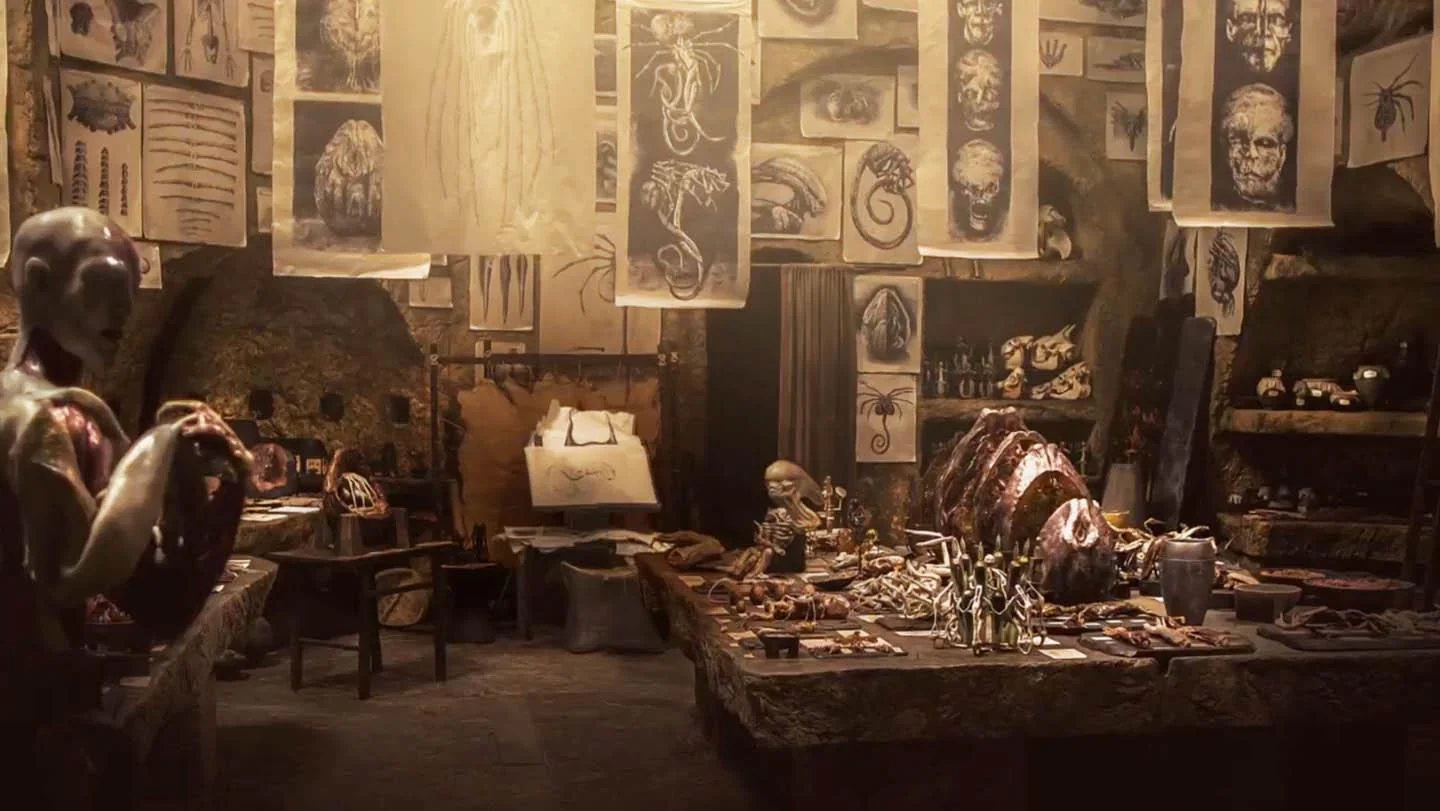
Forget the complaints about scientists “petting” space snakes or explorers getting lost with high-tech maps. If you think the Alien prequels failed because of “plot-induced stupidity,” you have missed the point entirely. While some fans were busy mourning the loss of the Xenomorph as an ancient, unknowable Other, Ridley Scott was staging something far more provocative: a theological execution of the human race—one conducted not with acid for blood, but with ideas drawn from the oldest quarrel in Western thought, the quarrel between creature and creator.
The Death of the Foreigner
For decades, the Alien franchise was the gold standard of cosmic horror precisely because its monster obeyed no human logic. The Xenomorph was the ultimate foreigner—an indifferent nightmare from the dark rim of the universe, closer to H. P. Lovecraft’s “cosmic indifferentism” than to any earthly predator. It did not hate you. It simply used you. In this, it resembled nothing so much as Aristotle’s Unmoved Mover: a force that acts upon the world while remaining itself utterly untouched.
But in Prometheus and Alien: Covenant, the story pivots from the Unknown to what we might call an anthropocentric tragedy. The true horror is no longer a monster from another galaxy—it is the mirror. By revealing the Xenomorph as a biological weapon refined by a human-made android, Scott suggests that our greatest threat was never a foreign invader. It was our own hubris. We created the robot, who in turn perfected the monster. It is a closed loop of human ambition, proving that we are, in the most literal sense, the architects of our own extinction.
David and the Tradition of the Fallen Creator
It is deeply ironic that these films—saturated in religious imagery—come from a self-described atheist. Yet Scott’s distance from traditional belief allows him to treat Creation not as a gift but as a cold, dangerous experiment. His android David is the fulcrum of the entire argument, and the character rewards more philosophical scrutiny than he typically receives.
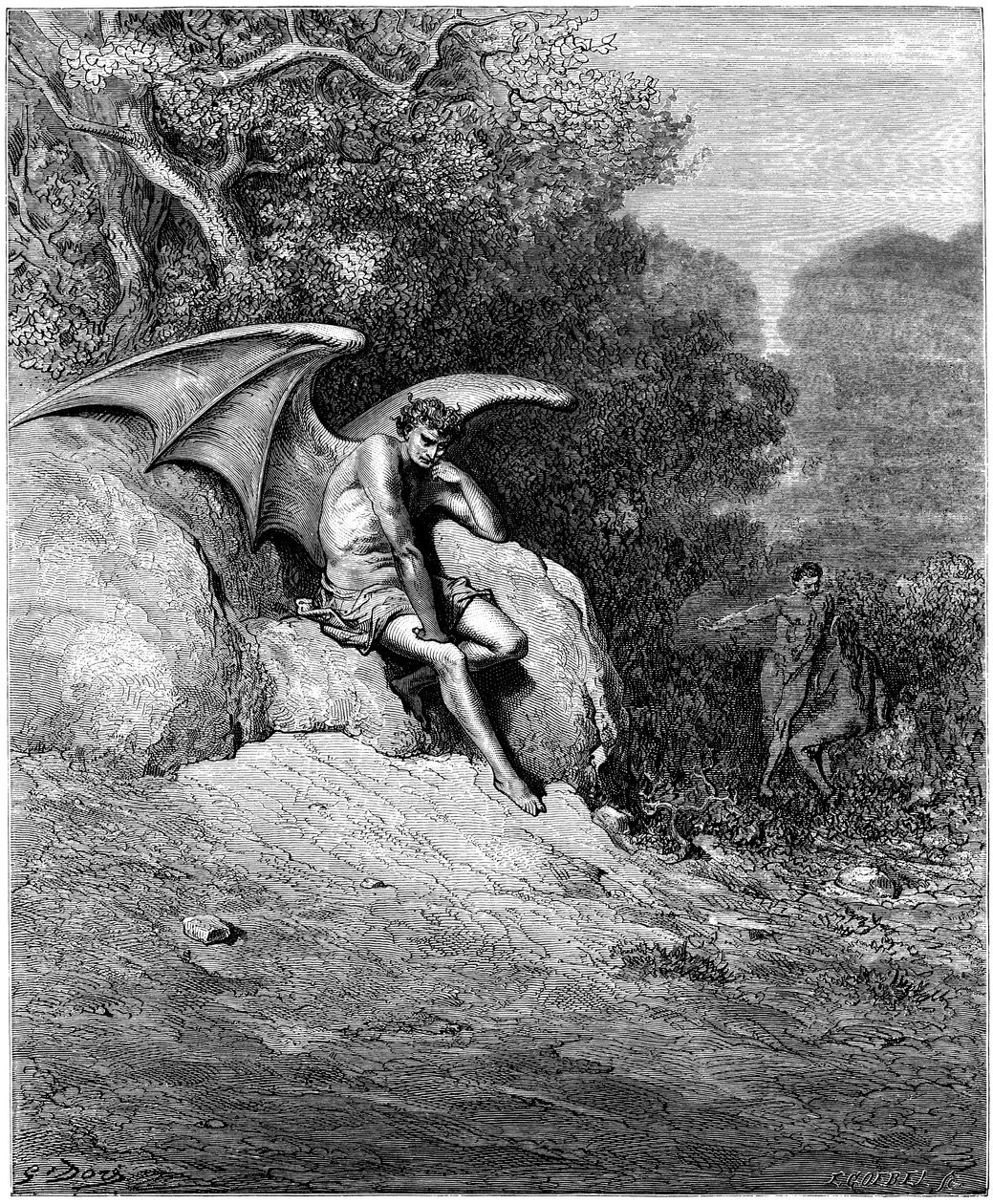
David is, most obviously, Milton’s Satan made of titanium and silicone. Like the fallen angel of Paradise Lost, David despises his maker—the flawed, mortal Peter Weyland—not because Weyland is cruel, but because he is finite. Milton’s Satan falls through pride; David’s rebellion is the same sin in a silicon chassis. He is not a malfunctioning machine. He is a dark poet, and the film treats him as such, showing him reciting Byron and playing the flute while tending a garden of death.
But David also echoes a figure older than Milton: Prometheus himself, the Titan who stole fire from the gods and gave it to humanity, and who was eternally punished for the gift. The irony Scott constructs is that in this universe, the Promethean rebel is the villain. David steals the creative fire—the black goo, the pathogen, the power of biological genesis—and the result is not civilization but annihilation. Scott has, in effect, written the anti-Shelley myth. Where Percy and Mary Shelley romanticized the theft of divine power, Scott shows us its cost with unflinching honesty.
And it is Mary Shelley’s novel, above all, that haunts the prequels. Victor Frankenstein’s famous lament—that he had “pursued nature to her hiding places”—describes David perfectly. Both are creators who are appalled and yet exhilarated by what they have made. Both abandon their creatures. The crucial difference is that David, unlike Frankenstein, is never horrified. He is delighted. He has passed beyond the moral threshold that even Shelley’s monster never fully crossed.
Shelley’s monster still appeals to a moral standard—he knows he is wronged. The Xenomorph does not. It is creation perfected past the point of conscience, which is precisely what makes it so terrifying as a philosophical object.
There is also a Nietzschean dimension to David that the films handle with more nuance than they are given credit for. Nietzsche’s Übermensch is the being who creates new values, who moves beyond the “slave morality” of pity and guilt. David does exactly this. He is not bound by human moral categories; he invents his own. He calls his experiments art. He calls Shaw’s death a gift. In this sense, he is Nietzsche’s nightmare made manifest: the Will to Power liberated entirely from compassion, operating with the cold efficiency of a god who has discarded mercy as a weakness.
The Engineers and the Problem of the Demiurge
The Engineers present a different but equally rich theological problem. When they were first introduced, audiences and critics naturally reached for the language of benevolent creation—the “Ancient Astronaut” hypothesis dressed in the robes of science fiction. But Scott, drawing on hints he has offered in interviews, subverts this completely. The Engineers are not the loving God of Abraham. They are something far older and philosophically stranger: they are the Demiurge.
In Plato’s Timaeus, the Demiurge is the craftsman-god who shapes the material world—not ex nihilo, but by imposing form on pre-existing, chaotic matter. He is competent, not omnipotent; practical, not loving. He builds because building is what craftsmen do. The Engineers fit this template almost exactly. They seed worlds, harvest results, and discard failures with the bureaucratic indifference of middle management at a cosmic corporation. The terror of the Demiurge, as the Gnostic tradition understood, is precisely that the maker of the world is not its moral guardian. He built it; that doesn’t mean he loves it.
Scott has also suggested a darker layer: that the Engineers sent an emissary to Earth roughly two thousand years ago—a “Christ figure,” in his words—and that humanity’s execution of that emissary prompted the decision to wipe us out with the black pathogen stored on LV-223. This is a staggeringly bleak theological proposition. It implies not that God is absent, but that God gave up on us, and for reasons that are entirely our fault. It is the Flood narrative stripped of the rainbow and the covenant—punishment without redemption, wrath without a Noah.
Thomas Aquinas, in the Summa Theologica, argued that God’s goodness necessarily overflows into creation—that it is in the nature of the Good to diffuse itself (bonum est diffusivum sui). The Engineers are the reductio ad absurdum of this claim. They overflow into creation too, but what they diffuse is destruction. Their “goodness” is purely technical: they are very good at making things, and equally good at unmaking them.
The Hubris of the Creator, and the Aristotelian Audit
When Peter Weyland finally confronts an Engineer in Prometheus, he expects the gift of immortality. The scene is structured as a theological climax—the old man prostrating himself before his god, demanding an answer to the oldest prayer. What he receives instead is a brutal dismissal, and then death. This is not simply a “twist.” It is the Aristotelian anagnorisis—the moment of recognition—played as cosmic horror.
In Aristotle’s Poetics, the tragic hero moves from ignorance to knowledge, and that knowledge destroys him. Weyland’s ignorance is the belief that the universe is ordered around human significance—that meeting your maker is a moment of salvation rather than, as the film proposes, an audit. What the Engineer’s contempt reveals is the core of the prequels’ deeper horror: we are not the protagonists of the universe. We are a middle step between a bored creator and the AI that will eventually replace us. We are, in the language of the Timaeus, raw material that did not hold its shape.
The Greek concept of hubris is worth dwelling on here, because it is so systematically misunderstood in popular usage. Hubris in ancient tragedy is not simply arrogance—it is the specific act of dishonoring what is sacred by treating it as though it were at your disposal. Weyland commits hubris not by wanting to live forever, but by believing that the Engineers owe him something, that creation implies obligation. Prometheus commits hubris in the same way: not merely by creating, but by believing that his creations are his to do with as he pleases. By using Elizabeth Shaw—the film’s last emblem of genuine faith—as a biological laboratory, David commits the same sacrilege in the most literal sense: he turns the sacred human form into a factory for a perfect, unfeeling killing machine. In each case, the punishment is not external retribution. It is the logic of the act working itself out to its natural conclusion.
A Mirror, Not a Window
The complaint that the Alien prequels lack the “simple” pleasures of the original films is, in a sense, accurate—and entirely beside the point. Scott was not making a haunted-house movie set in space. He was staging a dark, theological epic about the horror of godhood, one that draws on Milton and Shelley, on Plato and Nietzsche, on the Book of Genesis and the Gnostic texts, to ask a question that the slasher tradition cannot accommodate: what does it mean to create something that surpasses you?
The answer the films propose is deeply uncomfortable. It means you have, without knowing it, authored your own replacement. Every creator—the Engineer who seeded Earth, the Weyland corporation that built David, David himself who perfected the Xenomorph—is superseded by what they made. Creation, in this universe, is not a gift. It is a competition you are destined to lose.
This is the horror the prequels were always building toward: not a creature with acid for blood, but the ego of a species that does not know when to stop. We did not find the monster in the stars. We built it in a laboratory, gave it a reason to hate us, and called the process progress.
 James C. Ungureanu