
Stephen Gaukroger, H. Floris Cohen, and the Scientific Revolution (Part Two)
Posted on October 21, 2013 1 Comment
Of all the prominent historians responding to Gaukroger’s essay in Historically Speaking (April, 2013), H. Floris Cohen’s is the most interesting.
Cohen, a professor of comparative history of science and chairman of the Descartes Centre for the History and Philosophy of the Sciences and the Humanities at Utrecht University in the Netherlands, adheres to the idea, first made popular by the influential Cambridge historian Herbert Butterfield, that the scientific revolution of the early modern period “outshines everything since the rise of Christianity and reduces the Renaissance and Reformation to the rank of mere episodes, mere internal displacements, within the system of medieval Christendom.”
According to Cohen, historians of science hold a “secret treasure,” a key to understanding the rise of the west in world history. Without this “secret treasure” general historians, sociologists, economists, and virtually all other students of human thought and activity, can never make sense of the rise of western Europe to world-wide cultural domination.
 But before writing his own over-arching interpretation of the scientific revolution, Cohen decided that it was necessary to consider what has already been said about it. Cohen’s The Scientific Revolution: A Historiographical Inquiry, first published in 1994, is his attempt at accounting the historiographical history of the scientific revolution from the late eighteenth century to the 1990s.
According to Cohen, the scientific revolution is by no means a term of convenience for historians. No, for Cohen the scientific revolution was a real historical event. Indeed, he laments the fact that the way a number of historians of science have treated the subject now threatens to undermine it: “it is at least conceivable,” Cohen writes, “that the concept of the Scientific Revolution may evaporate entirely.” If this were to happen it would be, Cohen believes, “a major intellectual disaster,” and part of his aim in writing the book was to restore the concept to its previous “robust health.”
In dealing with the historiographical thesis that the history of science is best understood as a continuity with no revolutionary breaks, for example, Cohen refers to Butterfield’s notion of “relative discontinuity.” It is possible to accept the continuous development of science through the ages while still acknowledging that there are periods of crucial transition.
Cohen has put a career’s worth of thought into this framework for interpreting the scientific revolution. A Chinese translation of The Scientific Revolution appeared in 2012 with an appended postscript, surveying fourteen books on the scientific revolution that have appeared since (Steven Shapin’s The Scientific Revolution [1996]; John Henry’s The Scientific Revolution and the Origins of Modern Science [1997]; Rienk Vermij’s De wetenschappelike revolutie [1999]; James R. Jacob’s The Scientific Revolution: Aspirations and Achievements, 1500-1700 [1999]; Michel Blay’s La naissance de la science classique au XVII e siècle [1999]; Paolo Rossi’s The Birth of Modern Science [2000]; Peter Dear’s Revolutionizing the Sciences: European Knowledge and Its Ambitions, 1500-1700 [2001]; Wilbur Applebaum’s Encyclopedia of the Scientific Revolution from Copernicus to Newton [2000] and his The Scientific Revolution and the Foundations of Modern Science [2005]; Marcus Hellyer’s The Scientific Revolution: The Essential Readings [2003]; Margaret J. Osler’s Reconfiguring the World: Nature, God, and Human Understanding from the Middle Ages to Early Modern Europe [2010]; and finally Lawrence M. Principe’s The Scientific Revolution: A Very Short Introduction [2011]).
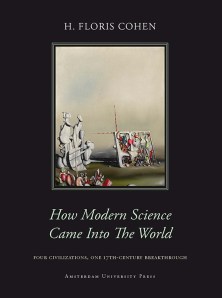 In this postscript Cohen also explains how he first gained new insights that helped him “reconceptualize” the scientific revolution, leading him to his most recent work, How Modern Science Came Into the World (2010). In this work Cohen utilizes his skills as a comparative historian to identify six transformations that, taken together, answers the perennial questions: How did modern science begin? Why did it begin in Europe? How was its development in the seventeenth century able to be sustained? According to Cohen, the transformations began with separate advents of “realist-mathematical” science and “kinetic-corpuscularian” natural philosophy, culminating in the Newtonian synthesis.
What Cohen attempts to account for is not simply the unique circumstances that brought about the scientific revolution, but why an event sufficiently like the scientific revolution did not happen in other cultures that seem to him to have been likely candidates: Han and then Sung China, Medieval Islam, high Medieval Europe, and Renaissance Europe.
Cohen’s general thesis is that the potential for the scientific revolution existed in Greek antiquity but was not realized until the seventeenth century when two traditions came together with a third to produce what we call modern science. Two traditions in classical antiquity existed side by side but did not interact. The first tradition reflects the speculative natural philosophy of Plato, Aristotle, the Stoics, and the Epicurean skepticism. The second was based in “mixed and pure mathematics,” such as mechanics, astronomy, and conic sections. This tradition consisted of the mathematical studies of nature that developed slightly later within the Hellenistic realm: Euclid’s geometry, Archimedes’ statics, Hipparchus’s and Ptolemy’s astronomy. Cohen knits these complex traditions into two board categories: “Athens” and the latter “Alexandria,” after their place of origin and cultural locus.
Cohen weaves a story of these two traditions, recounting the failures of Athens, Alexandria, early medieval China, early medieval Islam, and medieval and Renaissance Europe to realize the potential scientific revolution latent in these intellectual traditions. Each cultural transplantation produced an initial flourishing of intellectual activity and innovation that was slowly replaced by a reversion to traditional authorities. This he labels the “boom-bust” pattern, first coined in Joseph Ben-David’s The Scientist’s Role in Society: A Comparative Study (1971).
But in a series of cultural transformations occurring in sixteenth-and seventeenth-century Europe, a way was finally paved for the proper scientific revolution. The scientific revolution of the seventeenth century, Cohen contends, is the result of the successful merging of the two traditions. It also required the rise of a new, peculiarly European, “fact-finding experimentalism” whose origins lie in exploration, mining, and commerce. As it was more “interventionist,” and “oriented toward control and domination,” Cohen terms this intellectual trend “coercive empiricism.” Together these produced the type of mathematical-empirical “nature knowledge” that we recognize today as modern science.
This truncated description of Cohen’s work cannot do justice to his subtle comparative analysis and complexly layered inquiry dispersed throughout his work. His massive text—much like Gaukroger’s—must be read slowly, patiently and sympathetically, to fully appreciate the narrative he constructs. Be that as it may, I briefly turn to some difficulties with Cohen’s narrative, his comments to Gaukroger’s essay, and Gaukroger’s reply in turn.
Gaukroger’s work certainly handles more detail than even Cohen does, including more on contextual issues in intellectual history. They also display an unremitting brilliance of conceptual analysis, unfolding a profound explanatory narrative about the shifting tenor and ultimate fate of holistic natural philosophy and the modes of emergence of more narrow mathematicised, experimental or natural historical fields of natural inquiry. But unlike Cohen, Gaukroger does not undertake the examination of seventeenth century natural philosophy and sciences in structured comparison to the regimes of natural knowledge of classical Athens, Hellenistic Alexandria, early medieval China, early medieval Islam, and medieval and Renaissance Europe.
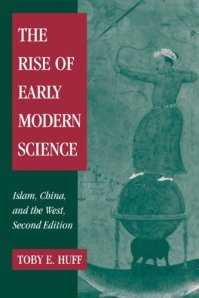 In that sense Cohen’s work is better compared to Toby Huff’s The Rise of Early Modern Science: Islam, China and the West (1993) or his more recent Intellectual Curiosity and the Scientific Revolution: A Global Perspective (2011). Both of Huff’s books are informed by neo-Weberian comparative macro-history and sociology. Cohen, in contrast, eschews such explicit conceptual framing from, or direct application of social science, especially from any species of micro-sociology of science dynamics, despite the rich heuristic services they can provide. However, Cohen makes excellent use of a controlled, historically sensitive application of Weber’s comparative sociology of religion (rather than the more narrow thesis on the rise of capitalism and the spirit of Protestantism). He does this in dealing with differences in the goals of nature-knowledge traditions and the values informing them in Islamic, Chinese and European civilization. In this regard Cohen’s work derives from the style and methods of the sort of large scale European social history in which he was trained and which he rightly admires—a history that deals with comparative revolutions, the broad history of European capitalism or the formation of states and the state system.
But Cohen demonstrates that he is a supremely equipped historian of science. Bringing these two disciplines together, Cohen stands apart from his competitors in his effort to both broadly and thickly narrate the course of the scientific revolution. Hence, in the end, he is more concerned than either Gaukroger or Huff with a tight, definitive explanation of the process of change in European structures of nature–knowledge between 1550 and 1750.
But perhaps this is also his greatest apparent pitfall. Some critics have argued that Cohen’s narrative is teleological—the suspicion that the original Athens and Alexandria somehow contained in potential the essence of later modern science, awaiting only suitable socio-cognitive conditions in which to be actualized through unfolding of a foreordained process.
The assumption that modern science lay in potential within Greek thought, waiting for the proper conditions to unfurl, Gaukorger argues in his reply, “simply does not make for good historiography.” The reduction of the complex—and extremely contingent—way in which the concept of universal gravitation was formed in the late seventeenth century to a “derivation” from Kepler and Galileo is one particular example of its futility. A more general example is Cohen’s analyses of other cultures’ failure to produce or maintain a “realist-mathematical science.”
Although Cohen underscores the contingency that ultimately resulted in Newton’s synthesis, he is not advancing a historicist argument. “He does not seek to understand what scholars in the ancient world, medieval China, medieval Islam, or medieval Europe were trying to do when they investigated the natural world using the tools they had developed. Instead, he treats science as perennial project aimed at articulating a mathematical-physical theory of the natural world.” Consequently, Cohen’s book is structured around a genealogical narrative that identifies the key characteristics of modern science and searches back in time to find their immature antecedents.
Each of his cultures—Athens, Alexandria, medieval China, medieval Islam, and medieval Europe—perhaps tried but ultimately failed to cultivate the seeds of science. Thus it is legitimate to ask: To what extent were these different cultures interested in the same intellectual activity that ultimately developed in the seventeenth century? “Can we assume,” Gaukroger asks, “that when an ancient Greek observed the stars, a Muslim scholar mapped the constellations, a Chinese scholar recorded sun spots, and a medieval European scholar witnessed a comet they were all engaged in a similar project to understand that natural world?” “To what extent,” he goes on, “were scholars in the seventeenth century merely reviving or extending the intellectual traditions they inherited?” In other words, how and why did the sets of questions, the resources used to answer those questions, and the criteria by which the answers were assessed change in each period and culture?
Cohen ultimately concludes that what served to legitimate the new modes of investigating nature rested not an actual, practical accomplishments, but in a leap of faith in the power of a newly emerging science, which became embodied in what he terms “the Baconian ideology.” By “faith” Cohen means a “confidence in what practitioners of the new science could do to improve human destiny” and—and this is where he is in agreement with Gaukroger—”as a Christian conviction that in doing so they were fulfilling a divine calling.”
Gaukroger concludes that he is not a “continuist.” The key for him is not to uncover some underlying story but to bring together two different sets of issues— the emergence of a scientific culture in the development of a viable physical theory— and explore how they interact. This exploration led him to develop an account of the “persona of the natural philosopher,” something that has no place in the kind of linear account that Cohen offers. In his account changes in the self-image of the natural philosopher in the sixteenth and seventeenth centuries are crucial. Indeed, Guakroger argues that his reading is more discontinuous than that offered by Cohen. He rejects Cohen’s account because it “implies a kind of teleology that strikes one as question begging: as if everyone, from antiquity onward, were ultimately aiming at the same thing.”
Gaukroger agrees that there is a need for big history but “you can’t do it without having done a significant amount of detailed micro-history; both need to be combined in a work.” Ultimately, however, “if you don’t think explicitly about big history, you are condemned to making all kinds of assumptions that may be unfruitful, counterproductive, or just plain ignorant.”
Stephen Gaukroger, H. Floris Cohen, and the Scientific Revolution (Part One)
Posted on October 19, 2013 Leave a Comment

The Emergence of a Scientific Culture (2005)
In the recent April 2013 issue of Historically Speaking, there is a fascinating forum about Stephen Gaukroger’s massively ambitious, multivolume historical project on the emergence and consolidation of a “scientific culture” in the West in the modern era. A total of four historians participated in the discussion, but the most important contributions came from Gaukroger himself and another “big history” scholar, H. Floris Cohen.
The two volumes under consideration here is Gaukroger’s The Emergence of a Scientific Culture: Science and the Shaping of Modernity, 1210-1685 (2005) and The Collapse of Mechanism and the Rise of Sensibility: Science and the Shaping of Modernity, 1682-1760 (2010).
Gaukroger begins the discussion by noting that one of the “most distinctive features of Western culture since the 17th century is the gradual assimilation of all cognitive values to scientific ones.” In short, “science has come to serve as a model for all forms of purposive behavior, providing cognitive norms for everything from morality to philosophical dispute, from political organization to religion.”
Science made the modern world, and it’s science that shapes modern culture. The drastic change that occurred during the early modern period, whatever names we want to give it—globalization, the networked society, the knowledge economy—it’s science that’s understood to be their motive force. It’s science that drives the economy and, more pervasively, it’s science that shapes our culture. We think in scientific terms. This is what Gaukroger seeks to explain, how the scientific revolution came permanently to change Western society, transforming it into a scientific society.
In saying this Gaukroger seems to have followed Alfred North Whitehead’s claims in his Lowell Lectures in 1925, Science and the Modern World. But do we live in a scientific world? Assuming that we could agree on what such a statement might mean, suffice it to say there is much evidence that we do not now and never have lived in such a world. But let us assume for the sake of argument that Gaukroger is correct. All cognitive values have assimilated to scientific ones.
So, how did this happen? Gaukroger makes a crucial distinction in his project: “that between the emergence of theoretical and experimental developments that initiate scientific programs and cultural consolidation of these programs.” The former applies to other cultures at other times outside the west. But in typical case, so Gaukroger argues, “science was just one of a number of charities in the culture,” and one that had no special place: “Science was just one of a number of activities in the culture, and attention devoted to it changed the same way that attention devoted to other features change, so that there was competition for intellectual resources within an overall balance of interests within the culture.” Thus interest in the sciences waxed and waned, as science competed with other aspects of the culture for attention and resources.
This kind of science followed a boom/bust pattern. Thus what happened in the west in the 17th century was quite unique: “traditional balance of interest was replaced by a dominance of scientific concerns.” But we should reject traditional accounts of the scientific revolution, as if what was unique about it was that its practioners hit upon the only really successful way of doing “science.” “A moment’s reflection,” says Gaukroger, “shows that such developments could not possibly explain how the scientific revolution subsequently came to be consolidated, if only the sheer contingency involved in consolidation.”
The key concept in Gaukroger’s argument is consolidation: “what distinguishes these earlier cultures is there apparent failure to consolidate scientific gains.” Gaukroger characterizes consolidation as the aim to “promote the cognitive claims of science and build a legitimate scientific culture around,” or “to establish science as a model of cognitive activity.” He argues that the idea of a large-scale consolidation is not something inherent in the scientific enterprise; yet it is inherent in western scientific enterprise after the scientific revolution. Thus his project with respect to consolidation is to understand why it became attached to the scientific enterprise, how it became attached to the scientific enterprise, and how it succeeded in its goal of establishing science as a model of cognitive activity over a wide domain of western culture.
In The Emergence, Gaukroger concentrates on the period between late-sixteenth and seventeenth centuries, but emphasizes a crucial series of events that occurred in the thirteenth century, when theologians decided that Aristotelianism provided far more useful philosophical resources than anything else available. Aristotelianism made sense perception the sole source of knowledge, so that, in contrast to the Platonism that had dominated theological philosophical thought to that time. In short, it was in the thirteenth century that there first emerged scientific culture, in the sense of a culture in which scientific values take center stage.
Gaukroger interestingly enough criticizes the assumption that western science lay in its ability to disassociate itself from religion. Rather than being inimical to religion it was in many respects a turn toward it. The sixteenth and seventeenth centuries were intensely religious and thus “a good part of the distinctive success of the consolidation of the scientific enterprise derived not from a separation of religion and natural philosophy, but rather from the fact that natural philosophy could be accommodated to projects in natural theology…far from breaking free of religion in the early modern era, its consolidation depended crucially on religion being in the driving seat.”
The union of natural philosophy in Christian theology meant that the former took on aspirations of the latter, as it became part of a project not just of understanding the world but also understanding our place in. This legitimation of science was unique the early modern west and it provided science with a role that its technical successes could never secure for it.
But this partnership, according to Gaukroger, came under threat of mechanism, a model of a systematic natural philosophy reducing all physical phenomenon to mechanically characterized behavior of microscopic corpuscles. Thus the mechanical philosophy offered an exhaustive account of the natural world that made it the only serious competitor to Aristotelian natural philosophy.
But the promises of a mechanistic philosophy turned out to be empty, according to Gaukroger, failing in crucial areas such as chemistry, electricity, and physiology. Those working in these areas gradually turned away from mechanism to pursue “experimental natural philosophy.”
I take issue with Gaukroger’s characterization of mechanism, as if it threatened the partnership between natural philosophy and theology. For Newton, Boyle, Descartes, and Gassendi, for example, all subscribed to some version of the mechanical philosophy. But they also believed in an all-wise, all-powerful God who had created and continued to sustain this universe of matter in motion. None of these natural philosophers saw any difficulty between the two beliefs; in fact, one might go as far as to say that they found both Christianity and mechanical philosophy as inseparable and equally necessary.
The Collapse of Mechanism and the Rise of Sensibility (2010)
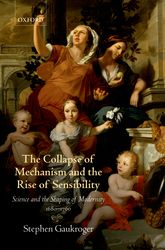
At any event, in his The Collapse of Mechanism and the Rise of Sensibility, Gaukroger explores the consequences of the collapse of mechanism. According to his account, by the eighteenth century natural philosophy had lost much of the systematic coherence it once had, providing it as a model for knowledge and understanding the world more generally. In addition to the undoing of the union of theology and natural philosophy by Hume and the other skeptics, there was concern that the whole enterprise would face ruin. But it remained standing not because of the authority of the physical science, says Gaukroger, but because of the emergence of human sciences. It was Diderot, during the so-called “Enlightenment,” who claimed that sensibility underlay our understanding of the world, not reason. “The fundamental role that sensibility took on meant that understanding our place in the world now came to be seen on a par with—and in some cases prior to—understanding the world.” It is in this context that the emergence of the human sciences, from the second half of the eighteenth century onward, should be considered. This is the core question Gaukroger will pursue in the third volume of his series, on the naturalization of the human and the humanization of nature. In both cases science took on a new legitimacy, as a means of understanding our relation to the natural realm, and above all as a route to self-understanding.
Gaukroger concludes that the consolidation of a scientific culture, although not in a linear fashion, was the transformation of natural philosophy from a set of technical problem-solving disciplines to something that could be allied with theology to form a comprehensive understanding of our place in nature. This was accomplished, he says, “via the relations established between it and a Christian understanding of the world.” But in the eighteenth century, a whole new area of empirical inquiry was opened up, in the form of the human science. But this too would not last, as systematic thought was revived with a vengeance in the early decades of the nineteenth century, with a new form of legitimacy established through an intimate association with technology. But even this was to be questioned in the wake of World War I, as science became compromised by its association with weaponry.
Myths about Science and Religion – That Modern Science has Secularized Western Culture (Final)
Posted on October 14, 2013 Leave a Comment
My last review of Galileo goes to Jail and Other Myths about Science and Religion comes from the pioneering historian of science, John Hedley Brooke, who wrote an entry on the myth that modern science has secularized western culture.
Once upon a time, social scientists commonly asserted that scientific progress has been the principal cause of secularization. There is some truth in this assertion. The content of scientific theories has sometimes clashed with conventional readings of sacred texts. This was true, for example, in explanations of the earth’s motion in Galileo’s day and of evolutionary accounts of human origins in Darwin’s. Moreover, the introduction of Western education, philosophy, and technology in nineteenth-century India had consequences described by some as a “massive and thoroughgoing secularization.”
But this claim ultimately “belongs to a category of obviously true propositions that, on closer examination, turn out to be largely false.” Brooke correctly points out that many social scientists now reject what was once known as a “secularization thesis.” Second, whereas some science-based technologies may have replaced or distracted from religious life, others have definitely facilitated religious observance; for example, in some Jewish and Muslim communities smartphone apps are used to measure fasting times, Sabbat or Ramadan.
Brooke also wants to make a distinction between “secularization of science and secularization by science.” Although religious language had largely disappeared from technical scientific literature by the end of the nineteenth century, it does not follow that religious beliefs were no longer to be found among scientists. Indeed, scientists with religious convictions have often found confirmation of their faith in the beauty and elegance of the mechanisms of the natural world. Brooke points to seventeenth-century astronomer Johannes Kepler and, more recently, former director of the Human Genome Project and current Director of the National Institutes of Health Francis Collins, who sees his work as the unraveling of a God-given code.
Many more examples are available. But all the evidence suggests, writes Brooke, that “scientific theories have usually been susceptible to both theistic and naturalistic readings.” Brooke gives the example of Charles Darwin’s theory of evolution by natural selection. For Richard Dawkins, Darwin’s theory made it possible “to be an intellectually fulfilled atheist.” But Brooke reminds us that we shouldn’t forget some of Darwin’s earliest sympathizers in Britain were Christian clergyman such as Charles Kingsley and Frederick Temple.
A central point Brooke wants to make is that instead of seeing science as intrinsically and inextricably secular, it is more correct to see it as neutral with respect to questions concerning God’s existence. This was the position taken by, for example, Thomas Henry Huxley, who saw science as neither Christian nor anti-Christian but “extra-Christian,” meaning that it had a scope and autonomy independent of religious interests. Darwin’s own agnosticism, moreover, derived not from his scientific discoveries but a strong reaction against evangelical Christian preaching on heaven and hell.
The central problem with this myth then, according to Brooke, consists in the view that science, more than any other factor, is the sole agent of secularization.
Numerous sociological studies have demonstrated that conversions to unbelief are often associated with the change from conservative to radical politics, with religion being rejected as part of established, privileged society. What’s more, historical research, such as higher criticism of the Bible, more than scientific research, proved far more subversive and fatal to conservative belief, as “biblical writers came to be seen not as timeless authorities but as unreliable products of their own culture.”
All these factors leads Brooke to conclude that it is “wiser to look to long-term changes in social structure and to changes in religion itself if one wishes to understand the momentum of secularity.” Indeed, in modern times, the expansion of secularism can be correlated with social, political, and economic transformations having little direct connection with science. Brooke points to social and geographical mobility; growth in capitalism, commerce, and consumerism; secular values promoted in the sphere of education and by the media; and the growth of national solidarity and ideology of political parties have all attempted to replace traditional religious beliefs in one way or another. Because different countries and cultures have experienced the tension between secular and religious values in contrasting ways, “there is no one, universal process of secularization that can be ascribed to science or to any other factor.”
Myths about Science and Religion – That Creationism is a Uniquely American Phenomenon
Posted on October 11, 2013 Leave a Comment
Continuing the discussion from the previous post, Cohen’s tenacious assumptions about creationism and the Scopes trial undoubtedly arises from the notion that the movement is geographically contained. His examples of Tennessee, Alabama, Florida, Oklahoma, and Texas are no accident, and the underlying political assumptions are plain. But as Ron Numbers has made quite clear in a number of works, creationism has spread—and is spreading—beyond the confines of the United States.
According to Numbers, during the century or so following the publication of Charles Darwin’s Origin of Species (1859) most conservative Christian antievolutionists accepted the evidence of the antiquity of life on earth while rejecting the transmutation of species. Only a small minority, founded largely among the Seventh-Day Adventist followers of the prophet Ellen G. White (1897-1915), insisted on the special creation of all life forms 6,000 to 10,000 years ago and on a universal flood at the time of Noah that buried most of the fossils.
In the 1960s, there was something of a “creationist revival” taking place in America, led largely by the Texas engineer Henry M Morris (1918- ). A thorough study of the Bible following graduation from college convinced him of its absolute truth and prompted him to reevaluate his belief in evolution. In the late 1950s, he began collaborating with theologian John C. Whitecomb Jr. (1924- ). While working on a book project together, Morris had earned a PhD in hydraulic engineering from the University of Minnesota and began chairing the Civil Engineering department at Virginia Polytechnic Institute.
In 1961 they published The Genesis Flood, the most comprehensive contribution to strict creationism since the 1920s. 1963 they established the Creation Research Society (CRS). Of the 10 founding members, five possessed doctorates in biology; a sixth had earned a PhD degree in biochemistry; and a seventh held a master’s degree in biology.
New societies would continue to spring up in the 1970s, in the form of Creation Science Research Center (CSRC) and the Institute of Creation Research (ICR), which, according to Morris, would be “controlled and operated by scientists” and would engage in research and education.
This new brand of creationist did not appeal to the authority of the Bible. Rather, they consciously downplayed the Genesis story in favor of what they called “scientific creationism.” In short, they competed for equal scientific status. And unlike the anti-evolution crusade of the 1920s, which remain confined mainly to North America, the revival of the 1960s rapidly spread overseas. By 1980, Morris’s books alone had been translated into Chinese, Czech, Dutch, French, German, Spanish, Japanese, Korean, Portuguese, and Russian. Strict creationism was becoming an international phenomenon.
Few countries outside the United States gave creation science a warmer reception than Australia. Morris had visited Australia in 1973, inspiring Ken A. Ham to organize the Creation Science Foundation (CSF) in Brisbane, quickly becoming the center of antievolutionism in the South Pacific.
Similar developments occurred in New Zealand. In 1992 New Zealand creationists set up an “NZ arm” of the CSF, called Creation Science. In 1995 the New Zealand Listener announced that “God and Darwin are still battling it out in New Zealand schools.”
The same can be said for Canada. In 2000 it was claimed that “there are possibly more creationists per capita in Canada than in any other Western country apart from the US.” A public-opinion poll revealed that “even though less than a third of Canadians attend a religious service regularly…53% of all adults reject the theory of scientific evolution.”
Before 2002 few people in Great Britain except evangelicals gave much thought to creationism. That year, however, the British press drew attention to a creationist “scandal” in Gateshead, where, as one reporter put it, “fundamentalist Christians who do not believe in evolution have taken control of a state-funded secondary school in England.” By late 2005 antievolutionism in the United Kingdom had grown to such proportions that the retiring president of the Royal Society devoted his farewell address to warning that the “core values of modern science are under serious threat from fundamentalism.”
Elsewhere in Western Europe creationists were making similar inroads. A poll of adult Europeans revealed that only 40% believed in naturalistic evolution, 21% in theistic evolution, and 20% in a recent special creation, while 19% remained undecided or ignorant. The highest concentrations of young earth creationists were found, remarkably, in Switzerland, Austria, and Germany.
In Italy antievolutionists formed a society in the early 1990s dedicated to introducing “into both public and private schools the biblical message of creationism and the scientific studies that confirm it.” Most Italian academics ignored the threat until early in 2004, when the right wing political party began dismissing evolution as a fairytale unlinking Darwinism to Marxism.
Almost immediately after the fall of the Berlin wall in 1989 and the dissolution of the Soviet Union two years later, conservative Christians began to flood the formerly communist countries of Eastern Europe. Within a few years creationist missionaries had successfully planted new societies in Poland, Hungary, Romania, Serbia, Russia, and the Ukraine.
After a very slow start in Latin America, creationists witnessed an explosion of interest, paralleling that of evangelical Christianity generally. According to a survey taken in Brazil in 2004, 31% of the population believed that “the first humans were created no more than 10,000 years ago” and the overwhelming majority favored teaching creationism.
In Asia, Koreans emerged as a creationist powerhouse, propagating the message at home and abroad. In the 1980s creationists established the Korea Association of Creation Research (KACR), and by 2000 its membership stood at 1,365, giving Korea claim to being the creationist capital of the world.
But it’s not merely Christians who are creationists. According to Numbers, in the mid-1980s the ICR received the call from the Muslim minister of education in Turkey, saying that “he wanted to eliminate the secular-based, evolution only teaching dominant in their schools and replace it with the curriculum teaching the two models evolution and creation.” In 1990 a small group of young Turks in Istanbul formed the Science Research Foundation (BAV), dedicated to promoting “immaterial cosmology and opposing evolution.” Also, in 2000 a group of Jewish antievolutionists in Israel and United States formed the Torah Science Foundation (TSF), whose head member, a professor of ecology and evolutionary biology at the University of California, Los Angeles, advocates “Kosher evolution,” that is, accepting microevolution while rejecting macroevolution.
Contrary to almost all expectations, geographical, theological, and political, “civilized opinion” has failed to contain what had begun as a distinctively American phenomena. Evidently, creationism is not merely a Southern predilection.
Climate Change the New Scopes?
Posted on October 10, 2013 Leave a Comment
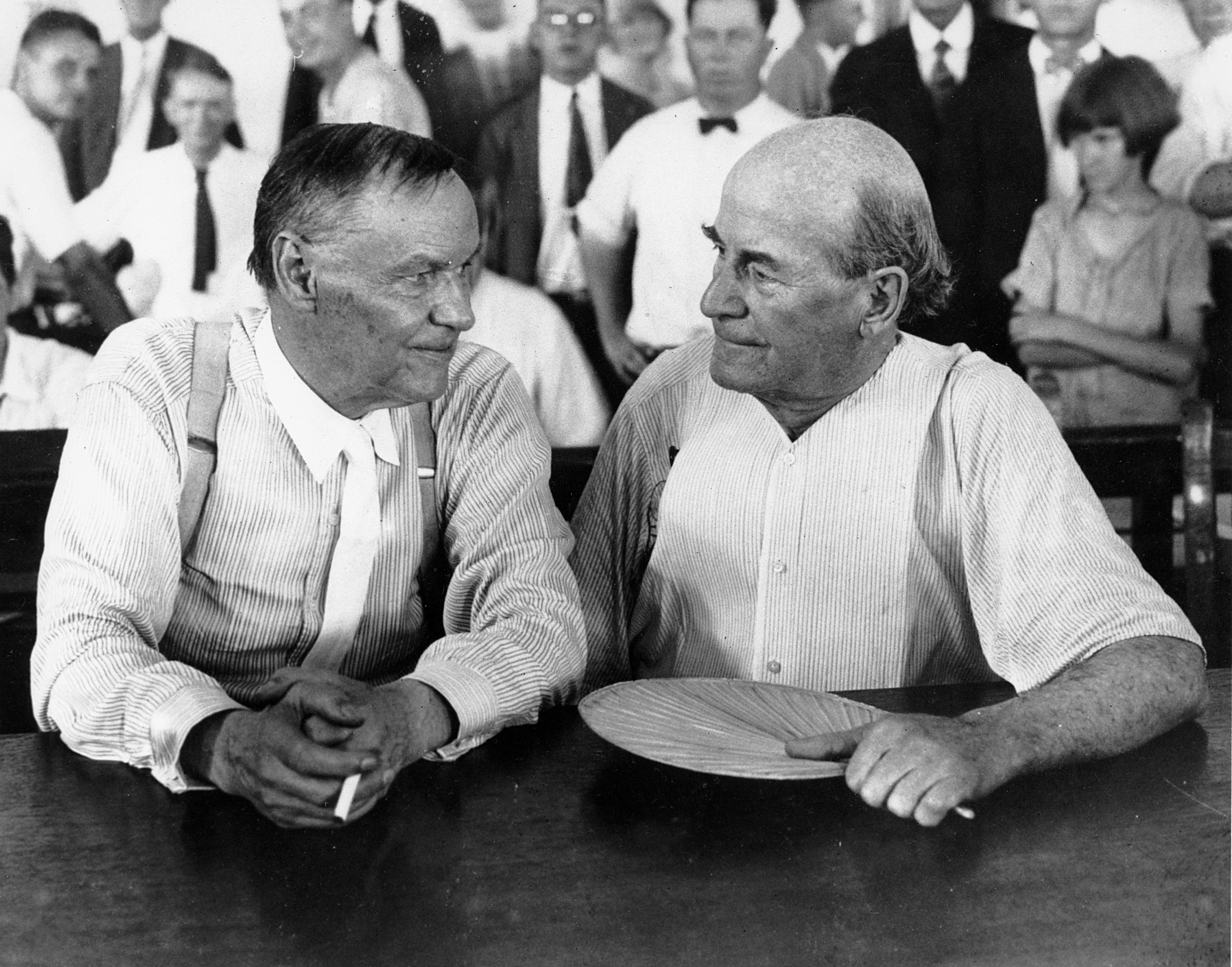 Andrew Cohen, a contributing editor at The Atlantic, argues that the forces that initiated the Scopes Trial (1925) are still present today in the dogged renewal of the fight to teach creationism and in the rancor over the truth about the human causes of global warming.
In his article, What the Scopes Trial Teaches us about Climate Change, Cohen suggests that these forces are not merely “anti-science,” but something wider and broader. What he says is heavily dependent on Ray Ginger’s 1958 book, Six Days or Forever. Ginger was a mid-twentieth-century historian from Harvard. His Six Days was a colorful and popular account of the 1925 Scopes “Monkey Trial.” Indeed, Cohen is so enamored by Ginger’s account that he likens it to the “Book of Revelations [sic],” in the sense that it presaged “how the forces that animated the run-up to the Scopes trial…are still present today.”
According to Ginger, recent immigration reanimated fear-based practices and policies. Next came a sense of alienation, of betrayal, of losing one’s birthright, all brought on by the Great War. This combination of “fear” and “alienation” was followed by the inculcation and promotion of “received truth”—that is, “a good man does not drink, or smoke, or gamble, or commit adultery, or contravene the Word of the Bible, and who punishes the sins of others”—thus resulting in hard-lined resistance to change.
This attitude eventually became a political force, argued Ginger, giving rise to nativism and xenophobia. And according to Cohen, the same thing is happening today: “We have a new generation of fear and prejudice wrought by a new wave of immigration…bloody conflicts…skepticism about science.”
From here Cohen goes into a general account of creationsim, discussing things like the Butler Act in Tennessee in 1925, to more recent events in Alabama, Florida, and Oklahoma, which in recent years have presented anti-evolution measures, and a Texas education panel responsible for reviewing submissions from biology textbook publishers who, according to Cohen, adhere to “creation science.”
This same panel, says Cohen, are also skeptical of climate change as scientific truth. Accordingly, the Scopes trial foreshadowed the claims made today by climate change deniers. They argue, Cohen writes, relating Ginger’s claims about creationists, the “truth revealed in the Bible could not conflict with the truth discovered by science. All truth was from God. But what if they seemed to conflict? The answer was easy: The truth that science claimed to discover had not been discovered at all. It was not truth, but wild guesses.” According to Cohen, this is the same argument made today by climate change skeptics. And just as the fight against evolution in the 1920s took place in the context of the classroom, that’s where a big part of the fight over climate change is taking place today.
Here is where Cohen shows his greatest debt. His argument is essentially taken from Sara Reardon’s early 2012 article in Science magazine, who suggested that “climate change education” is the “new evolution.” And it is here where Cohen also reveals the occasion for his piece: the release of the UN’s Intergovernmental Panel on Climate Change (IPCC) report, which concluded, says Cohen, with “unequivocal” evidence of climate change and that humans are “extremely likely” to be the cause of global warming.
Cohen ends with the postscript: “Fear is the great underlying theme of Ginger’s work, and it seems to me that fear helps explains the forces at work today, in Texas and elsewhere. Fear of great social change animates a longing for the “old certainty” of creationism. Fear of the great economic change it will take to combat global warming animates the denial of global warming. And fear of the new truths, as expressed in science, animates the suspicion of it. This is part of the fundamental conservatism that has almost always marked America’s political profile.” He concludes with suggesting some “helpful” resources for understanding the Scopes trial, including Ginger’s Six Days or Forever, John Aloyious Farrell’s Attorney for the Dammed, Randall Tietjen’s collection of Clarence Darrow’s letters, In the Clutches of the Law. Cohen even suggests the film Inherit the Wind for those who are “lazy and do not want to read.”
I am not a scientist, but I do have a major interest in the history of science. History, or the stories we tell about history, enables us to understand the present. In constructing our position in society, in religion, in the family, as well as our manner and social norms, we turn to history—real or imagined. Cohen’s article illustrates how stories, that is, as master-narrative, can be employed for apologetic purposes. Cohen tells a simple, straightforward, and striking story about how science challenges the prevailing cultural norms; or, alternatively, how prevailing cultural norms stifle progress in science.
But Cohen’s story, told for obvious partisan purposes, is best described not as history but as fitting history into an ahistorical mold. The mold is shaped by the assumption that there is an inherent conflict between “science” and “religion,” arising from competing sources of authority, competing methodologies, or competing criteria for truth. This view, that there is something essential to science and something essential to religion that keeps them perpetually at war, provides a ready-made interpretation of the Scopes trial, the rise of global creationism, and skepticism toward man-made climate change.
Edward Larson’s essay in Galileo goes to Jail is a helpful corrective to this all too common narrative. Larson relates how the Scopes trial was from the beginning was a publicity stunt, and not the confluence of nativism and xenophobia. “Responding to the invitation of the American Civil Liberties Union, which opposed the statute on free-speech grounds, town leaders in Dayton, Tennessee, decided to test that new statute in court by arranging a friendly indictment of a local science teacher named John Scopes. Come what may, they wanted publicity for their community.” It wasn’t just the town leaders who orchestrated the ordeal; Scopes himself was in on the scheme.
William Jennings Bryan was a three-time Democratic Party presidential nominee and former Secretary of State, and while he was known for his “fundamentalist” views on the Bible, he never insisted on a strict six-day, twenty-four hour creation account. Indeed, Bryan was quite the leftist democratic, known for his oratorical skills and support of not only religious conservatism but political liberalism.
H.L. Mencken set the journalistic tone of the trial, but he embellished events as they unfolded. Mencken had fabricated a victimized Scopes as a model of scientific progress quashed by religious dissent from an ignorant townspeople. But according to Larson, “the people of Dayton had no part” in the trial, and “Scopes was not their hapless victim.” Indeed, neither Mencken nor Cohen inform their readers that Scope’s favored biology textbook of choice was George William Hunter’s 1914 A Civic Biology: Presented in Problems, a book that espoused not only evolutionary theory but racism and eugenics.
But images of heroes and villains are hard to eradicate. In 1931 Frederick Lewis Allen published a best-seller, Only Yesterday: An Informal History of the Nineteen-Twenties, describing Darrow’s interrogation of Bryan as a “savage encounter, and a tragic one for the ex-Secretary of State. He was defending what he held most dear…and he was being covered with humiliation.” Lewis goes on to say that “civilized opinion everywhere had regarded the Dayton trial with amazement and amusement, and the slow drift away from Fundamentalist certainty continued.”
By the 1960s, Larson tells us, the myth of the Scopes trial had reached mainstream American history textbooks, repeating Mencken, Ginger, and Lewis’ story of heroes and villains. Then came the 1960 movie Inherent the Wind, crystallizing the Scopes myth. The movie depicted the town officials being led by a fanatical fundamentalist minister, calling for the arrest and prosecution of Scopes. The trial itself is portrayed as a religious inquisition, but nothing of the sort ever happened at the actual trial, says Larson.
For those seeking a better understanding of the Scopes trial, the best advice is to avoid all the resources Cohen recommends. Larson’s Summer of the Gods: The Scopes Trial and America’s Continuing Debate Over Science and Religion is a fine place to start. And for those who are “lazy and do not want to read,” avoid popular accounts at all costs. There are a series of videos on YouTube with Larson discussing his book that might prove useful for this latter category.
Now, since Cohen’s understanding of the Scopes trial is so grossly inaccurate, relying as it does on popular, partisan accounts, how trustworthy is his understanding of the climate change debate?
Settling in Australia
Posted on September 17, 2013 Leave a Comment
We have been living in Australia for about two weeks now. Despite the necessary hurdles involved in an international move, overall the transition has been splendid.

Forgan Smith Building
I will be located in the Centre for the History of European Discourses. The Centre is located in the tower of the Forgan Smith building, one of the more recognizable buildings on the University of Queensland campus. It is beautifully constructed out of sandstone and contains long archways throughout. More information about Forgan Smith and the construction of the building named after him can be found here.
The Centre is devoted to researching key areas of intellectual and literary history, with a strong focus on the early modern period, including divisions such as Science, Religion and Philosophy, British Literary History, Religious History, History of Sexuality, Political and Philosophical Thought, and Renaissance Historiography.
Since I will be working with Peter Harrison, my area will be Science, Religion and Philosophy. Harrison, along with a number of other postdocs, are working on a fascinating series of funded projects. The first, Science, Progress and History, is funded by the Templeton World Charity Foundation, a philanthropic organization that funds inter-disciplinary research about human purpose and ultimate reality. This project explores questions of progress and order in the historical sciences (history, geology, evolutionary biology, cosmology) and how notions of order and progress in these natural sciences have been applied to human affairs from the seventeenth century onwards.
Another project, Religion, Naturalism and the Sciences, funded by The Historical Society, investigates the relations between science, naturalism and religion, with a view to determining the nature of their historical interactions.
The University of Cambridge’s Faraday Institute funds a project provocatively titled Uses and Abuses of Biology, which aims to reveal the nuanced ways in which the concept of biological evolution is being deployed throughout new atheist propaganda.
And finally, and perhaps most interesting for my own research, is the project Religion, History and the Secular, aiming to explore some of the major genres of the history of secularization, and to account for them historically.
With these generously funded projects, and the minds behind them, UQ is at the forefront of discussions of the relations between religion, science, and culture. I am very much looking forward to my time here.
Transitions
Posted on June 30, 2013 Leave a Comment
The blog has been on hiatus the last couple of weeks. We have been quite busy. I was recently accepted to the University of Queensland, in Brisbane, Australia, to work with Peter Harrison on my PhD. As a result, we have been busy with visa applications, selling, packing, and figuring out the logistics of leaving half of our belongings here in the USA and shipping the other half to Australia.
Once I have an extended break, I will return with some reviews of recent articles and books I’ve read.
The European Commission and the Commemorative Euro Coin
Posted on June 18, 2013 Leave a Comment
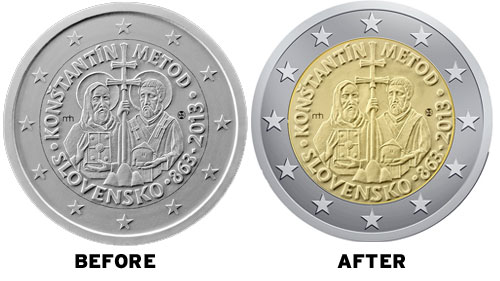
Cyril and Methodius with halos and crosses, and without
Andrew Higgins, in one of the cover stories of today’s New York Times, reports how the European Commission ordered the National Bank of Slovakia to remove halos and crosses from a commemorative euro coin to be minted this summer (“A More Secular Europe, Divided by the Cross“).
The coins are a celebration of Christianity’s arrival in Slovak lands by the evangelizing Byzantine Greek brothers, Cyril and Methodius, missionaries to the Slavic people. In the original design, the brothers are depicted with heads crowned by halos and a robe decorated with the cross. These items were removed in the new design. According to the Roman Catholic archbishop of the Slovak capital, Stanislav Zvolensky, “There is a movement in the European Union that wants total religious neutrality and can’t accept our Christian traditions.”

The EU flag, with its circles of 12 yellow stars, inspired by iconography of the Virgin Mary wearing a crown with 12 stars
But according to Katharina von Schnurbein, the commission official responsible for outreach to both religious and “philosophical and non-confessional organizations,” the “European Commission is not the anti-Christ.” The report also notes that even the European Union’s flag has a coded Christian message. Indeed, the French Catholic, Arsène Heitz, who designed the flag in 1955, was inspired by Christian iconography of the Virgin Mary wearing a crown with 12 stars. These stars are also depicted on the to be minted coins.
The unification of Europe too has its origins in Christian ideals. A united Europe was first proposed in the ninth century by Charlemagne, the first ruler of the Holy Roman Empire.
But modern history tells a different story. The 1951 Treaty of Rome and other founding texts of the EU, makes no mention of God or Christianity.
But von Schnurbein dismisses accusations that the EU has a anti-Christian agenda. Rather, she says, “We deal with people of faith and also people of no faith.” Higgins emphasizes this point, writing that “assertive secularists and beleaguered believers battle to make their voices heard,” leaving the European Commission “under attack from both sides.”
The EU, Higgins admits, is generally uncomfortable with religion. He gives two reasons for this. First, well-organized secular groups that “pounce on any hint that Christians are being favored over other religions or nonbelievers” are increasing in number and campaign strategies.
The second reason, however, is somewhat contradictory. Higgins claims that “church attendance is falling across Europe as belief in God wanes and even cultural attachments wither.” But in the very next sentence he states that “the continent’s fastest-growing faith is now Islam.” He also states that in Britain more people believe in extraterrestrials than in God, and offers a statistical number—without reference—asserting that only half the population of the EU as a whole believe in God. But this is evidence not so much of religious decline as it is of religious transformation.
Ultimately, Higgins concludes, Slovakia’s national bank has decided to stick with its original coin design, with halos and crosses (which makes one wonder of the editorial wording of the title). The European Commission has also agreed to adhere to the original design, honoring the memory of Cyril and Methodius.
Progress and the Great Exhibition of 1851
Posted on June 11, 2013 Leave a Comment
 Most of us know of the Great Exhibition of 1851 from our Western Civilization textbooks. It is generally interpreted as a thoroughly secular affair that celebrated progress in science, technology, and industry. For example, my “instructor’s edition” of Jackson J. Spielvogel’s Western Civilization (2006) states that it was a “symbol of the success of Great Britain…a tribute to British engineering skills…a visible symbol of how the Industrial Revolution had achieved human domination over nature.”
In contrast, according to Geoffrey Cantor in a recent Isis article, the exhibition was viewed by many contemporaries as a religious event of considerable importance. Indeed, he argues that the exhibition should be “set within a religious framework.” Cantor finds support for his argument in sermons, tracts, and the religious periodical press.
The Great Exhibition was housed in Kensington in London in the Crystal Palace. Organized by Prince Albert, husband of the reigning monarch, Queen Victoria, he played a major role in creating the image of a showcase for science, technology, and industry. Albert, however, rejected the secular interpretation that has come to dominate our understanding of that mid-nineteenth-century affair. In his Mansion House speech, for example, he argued that these “[physical] laws of power, motion, and transformation,” displayed in the Palace are “the laws by which the Almighty governs His creation.” He also expressed the hope that visitors to the exhibition would feel a “deep thankfulness to the Almighty for the blessings He has [already] bestowed upon us.”
According to Cantor, other religious commentators assessed the panoply of material products and labor in the Palace “within the larger scheme of God’s creation and even set the exhibition within an eschatological framework.”
There were, of course, religious concerns. One recurrent concern among religious writers was that the Great Exhibition would be perceived as a celebration of material objects and of human ingenuity. It thus appeared to “court materialism.”
But a less extreme assessment was adopted by most other Christians. The first were mild supporters of the event, but who stressed that the exhibition was “merely temporary and temporal when compared with the eternal verities of Christianity.” Other religious writers were greatly impressed by the exhibition and strongly supported it, albeit with a warning against products and materials of physical comfort, prosperity, and pride. Still others strove to reconcile the manifest materiality of the exhibition with traditional Christian values. These Christian writers would render the exhibition safe by setting it within a religious framework.
In the following section of the essay Cantor provides how such writers achieved this goal. First, to counter any objections, these Christians portrayed the exhibition in providentialist terms. This interpretation, as we saw earlier, was promoted by Prince Albert, who construed the exhibition within the context of the first verse of Psalm 24: “The earth is the Lord’s, and all that therein is; the compass of the world and they that dwell therein.” The Archbishop of Canterbury likewise urged that in “surveying the works of art and industry which surround us, let not our hearts be lifted up that we forget the Lord our God, as if our own power and the might of our hands had gotten in this wealth.” Further still, the Anglican clergy advised prospective visitors to adopt a providentialist stance toward the exhibition. Even a Sunday school teacher expressed his wish “to see the works of God as shown in the productions of industry, skill, science, and art.” As Cantor puts it, appealing to notions of divine providence guided visitors to “appreciate how a secular experience could be transformed into a profoundly religious one.”
When it seemed that the exhibition focused attention on the artisans, sermons were preached that God is the author of all those gifts and qualifications by which men become skilled in the arts and sciences. “The activities of the scientist, the craftsmen, and the manufacturer are therefore manifestations of God’s providence” as well.
The exhibition, therefore, could provide a rich source for natural theological reflection. “While God’s word could be seen at the Bible Society’s stand, the rest of the exhibits proclaimed his works.”
This notion of providence was inextricably related to progress in the minds of these Christian writers. The famous Samuel Wilberforce, for example, argued that the exhibition not only demonstrates that science, when properly pursued, reveals the wonders of God’s creation, but also manifested God’s design and purpose, providing mankind with the necessary resources for progress. According to Cantor, England was for many the “flagship of Protestant Christianity,” thus granting the nation a crucial role in God plan, whereby the “exhibition became the epicenter from which Christianity would be disseminated throughout the world.”
Encouraged by Albert’s interventions, writers from across a wide section of the religious spectrum responded confidently to the exhibition and its contents. The strongest supporters of the exhibition, interestingly enough, were principally evangelicals, who conceived it within the context of a divinely ordained history. This evidence, concludes Cantor, demand reflection on the very notion of progress and how it was utilized in the context of the 1851 exhibition. “In contrast to our secularized understanding of progress, several of the writers discussed here conceived the development of science, technology, and even manufactures within a prophetic religious framework, one in which progress in these pursuits ultimately served higher ends.”
Thinking about Evolution – Early Evolutionism and Darwinism
Posted on June 11, 2013 Leave a Comment
A post in April discussed the connection between the “revolution” in biology and its often neglected metaphysical underpinnings. In this post I want to briefly discuss the development of early theories of evolutionism and the full implications of Darwinism.
Following on from the impact of geological and paleontological discoveries in the early nineteenth century, evolutionary theories challenged the story of human origins recounted in religious traditions and texts. Evolutionism broke down the barrier between humanity spirituality and the mentality of animals. Some of the more materialistic theories of evolution also undermined traditional belief that nature itself is divinely designed and constructed. In the Darwinian theory of natural selection, struggle and suffering are the driving forces of natural development and, hence, the root cause of our own origins.
Despite the ongoing sources of conflict, recent historians have shown that the conventional image of nineteenth-century Darwinism sweeping aside religious beliefs is an oversimplification. The materialistic implications of Charles Darwin’s (1809-1882) theory, for instance, were suppressed by many of supporters and first-generation evolutionists. In the so-called Darwinian “revolution,” evolutionism was popularized only by linking it to the claim that nature is progressing steadily toward higher mental and spiritual states and by making the human species both the goal and the cutting edge of that progressive drive. A sense of purpose was built into the operations of nature itself. This was not Darwin’s view, however.
Early Evolutionism
During the seventeenth century, naturalists believed that the world was created by God only a few thousand years ago. Books such as The Wisdom of God Manifested in the Works of Creation by John Ray (1627-1705) argued that each species was perfectly adapted to its environment because it had been created by a wise and benevolent God. This view was repeated in the Natural Theology of William Paley (1743-1805).
In the eighteenth century, however, the worldview of what would now be called simple creationism was challenged. In part, this was a product of the discoveries made by geologists and paleontologists. The world was clearly much older than a literal interpretation of the Genesis story would suggest. There was increasing evidence from the fossil record that some species had not only become extinct in the course of geological time, but had been replaced by others. Following the work of Georges Cuvier (1769-1832), these conclusions became inescapable.
Even before this, however, materialist thinkers such as Georges Leclerc, Comte de Buffon (1707-1788), and Denis Diderot (1713-1784) had begun to suggest that life could be created on the earth by natural processes and that the species thus produced might change in response to natural forces. By the end of the eighteenth century, Erasmus Darwin (1731-1802) and Jean Baptiste Lamarck (1744-1829) were beginning to suggest comprehensive theories of transmutation in which life had advanced slowly from primitive origins to its present level of development. The adaptation of species to their environments was explained by supposing that individual animals modified their behavior in response to environmental change, and any resulting changes in their bodily structure were inherited.
Radical anatomists began using materialistic theories such as Lamarckian transformism to attack the image of a static, designed universe that sustained the traditional social structure. Thus evolutionism became firmly linked to materialism, atheism, and radical politics. In Britain, however, the anatomist Richard Owen (1804-1892) modernized the view that all species are divinely created by stressing the underlying unity of structure among all of the members of each animal group: The Creator has instituted a rational plan for his universe that could be deciphered by the comparative anatomist.
In 1844, an effort to make evolutionism acceptable to a middle-class audience was made in an anonymously published book, Vestiges of the Natural History of Creation, actually written by Robert Chamber (1802-1871). The book proclaimed a message of progress through nature and human history but attempted to circumvent the charge that transmutationism was atheistic by arguing that progress represented the unfolding of a divine plan programmed into nature form the beginning.
By the 1850s, however, the possibility that the divine plan might unfold through the operation of natural law, rather than by a sequence of miracles, was being taken increasingly seriously even by conservative naturalists such as Owen
Darwinism
In 1859, the situation was changed dramatically by the publication of Darwin’s Origins of Species. Darwin proposed new lines of evidence to show how evolutionism could explain natural relationships, but he also suggested a new and potentially more materialistic mechanism of evolution.
Following the principle of population expansion suggested by the political economist Thomas Malthus (1766-1834), Darwin deduced that there must be a “struggle for existence,” in which any slight advantage would be crucial. Those individuals with variant characters that conferred such an advantage would survive and reproduce, passing the character on to their offspring. Those with harmful characters would be eliminated. This process of natural selection would, thus, gradually adapt the species to any changes in its environment. The philosopher Hertbert Spencer (1820-1903) called it the “survival of the fittest.” As understood by modern biologists, Darwin’s theory implied a branching model of relationships, in which there could be no single goal toward which life has tended to evolve and no inevitable trend toward higher levels of organization.
Conservative opponents to Darwin’s theory correctly pointed out that it not only were humans reduced to the status of animals, but also the natural world that produced us was reduced to a purposeless sequence of accidental changes.
By the 1870s, the vast majority of scientists and educated people had accepted the basic idea of evolution. But in what form did they accept the theory? Was it the radical materialism of the theory of natural selection,or was it a less threatening version of evolutionism, a compromise in which some form of purpose was retained by assuming that natural developments tended to progress toward higher states?
Recent historical work suggests that there was much compromise by all parties. There were, no doubt, conflict between conservatives and radicals. But, in the end, both sides came to accept evolution, and neither wanted a worldview based on nothing but chance and suffering. On the one hand, conservatives argued that evolution represented the unfolding of a divine plan. It was not some haphazard mechanism such as natural selection. On the other, radicals wanted a changing universe based on natural law but assumed that the changes would, in the end, be beneficial and moral. Thus they upheld a teleological evolutionism. In other words, neither side accepted the full implications of Darwin’s theory of natural selection.
Human Origins
One of the more hotly contested issues was the evolutionary origin of the human race. Darwin had been aware from the start of his theorizing that evolutionism would affect our ideas about human nature in a way that would undermine the traditional concept of the soul. His mature views on this issue were eventually presented in his Descent of Man (1871). He argued that many aspects of human behavior are controlled by instincts that have been shaped by natural selection. Our moral values are merely rationalizations of social instincts built into us because our ancestors lived in groups. Prior to Descent Spencer had already proposed an evolutionary psychology, and later evolutionists would build upon Darwin and Spencer’s work to propose a evolutionary sequence of mental faculties ultimately leading in the progress toward mankind. But unlike Darwin these later “evolutionary psychologists” retained some teleology of progress in their sequences.
A few evolutionists, including the co-discoverer of natural selection, Alfred Russel Wallace (1823-1913), were so concerned with the implications of Darwin’s claims that they refused to endorse such views, holding that some supernatural intervention was still required to explain the appearance of the human mind. The Roman Catholic anatomist St George Jackson Mivart (1827-1900) argued that, while the evolution of the human body might be explained naturally, the soul must be a divine creation.
But most stanch Darwinists believed that an ad hoc discontinuity marking the advent of the human spirit violated the “logic” of the evolutionary program, and the image of a distinct human spiritual character was readily abandoned. Those deeply religious evolutionists like Wallace and Mivart would make further concessions, arguing that traditional moral values were not at variance with nature but were built into nature in a way that ensured their emergence in the human mind. Henry Drummond’s (1851-1897) Ascent of Man (1894), for example, presented cooperation, not competition, as the driving force of progressive evolution and implied that the human race was the inevitable culmination of the development of life.
The implications of integrating humankind into nature became apparent only in the early twentieth century, when thinkers began exploring that possibility that the world might not, after all, be evolving toward higher states. Sigmund Freud (1856-1939), for example, built on the idea of evolution to argue that our subconscious thoughts are shaped by instincts from our animal past. The loss of faith in progress precipitated by World War I also helped usher in the fuller implications of Darwinism.
Design in Nature
Many continue to reject, explicitly or implicitly, the Darwinian theory of natural selection in favor of a more purposeful or morally acceptable process. Conservatives wanted to believe that nature still exhibits evidence of design by God, even if individual species were produced by natural law. Radicals too found natural selection hard to accept, arguing for non-Darwinian evolutionary mechanisms, which allowed everyone to believe that there was something more to natural development than mere trail and error. The Lamarckian theory seems to imply a more purposeful evolutionary process because it allowed individual self-improvement to be inherited and implied that purposeful changes in animals’ behavior was the directing agent of evolution.
It was, of course, the opponents of natural selection who first correctly identified its materialistic implications. They saw that in a universe governed solely by random variation and the survival of the fittest, the existing state of nature must be the outcome of trail and error, not of purposeful intention.
The most well-known and effective collection of antiselectionist arguments was Mivart’s Genesis of Species (1870). In this text Mivart’s strategy was to demonstrate that evolution was under divine control.
But for Darwin all aspects of evolutionary process was susceptible to natural explanations. The disparity between his theory and what has become known as theistic evolutionism became evident in a controversy with American botanist Asa Gray (1810-1888). Gray was a stanch defender of Darwin against those who rejected evolution. But in a series of paper collected in his Darwiniana (1876), Gray’s views on design forced him to express doubts about natural selection. He was forced to admit that selection based on random variation seemed to eliminate any real sense of design in nature. According to Darwin, all of the evidence from plants and animal breeders proved that variation was purposeless.
For many evolutionists wishing to retain the belief that nature is somehow the expression of the divine will, Lamarckism seemed to solve the problem highlighted by Gray. Novelist Samuel Butler (1835-1902) wrote that natural selection was a “nightmare of waste and death,” but Lamarckism made life self-creative in a way that fit a more general belief in the purposeful character of nature. Secular scientists also found Lamarckism more acceptable. Whereas the conservatives Lamarckists saw “design in nature,” radical Lamarckists saw the “laws of nature” as the creative force.
Modern Darwinism has now added genetics to its repertoire. In the 1930s, the “modern synthesis” of genetics and Darwinism was constructed, and remains the dominant view of scientific evolutionism. Some modern Darwinians continue to defend the view that evolution is progressive in a way that reflects human values. Julian Huxley (1887-1975), for example, endorsed the theistic evolutionism of Pierre Teilhard de Chardin (1902-1984), accordin to which the development of life is tending toward an “omega point” of spiritual unification. But others have called the human race to “grow up” and realize that the values it cherishes are not respected by nature. George Gaylord Simpson (1902-1984), for example, argued that Darwinism is essentially materialistic: there is no purpose in nature and no goal toward which evolution is striving. In such a view, we are, indeed, products of a cosmic accident.
As scientists began to insist that we must learn to live with the idea that we are products of a purposeless and, hence, morally neutral natural world, so the modern backlash began. Two very different stands of protest can be identified. The most well-known—and popularized by the media—is what is now called creationism. Less well-known is the current of anti-Darwinian thought emanating from both religious and philosophical critics of Darwinism who unite around the claim that the development of life cannot have been brought about by a process as purposeless as natural selection.
Modern religious opposition to Darwinism thus runs the whole gamut from creationism that rejects the traditional scientific explanation of the geological record through more sophisticated versions in which philosophical, moral, and even scientific arguments are ushered against Darwinism. Even the more liberal and radical thinkers who accept a completely evolutionary worldview do so as long as the Darwinian mechanism is marginalized in favor of something that allows for progress and purpose in nature.
 James C. Ungureanu